

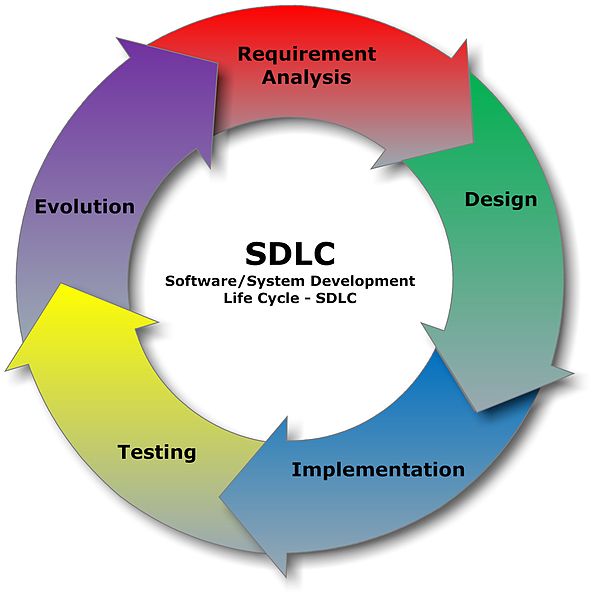
In the Relational Database Management System (RDBMS) SDLC stand for the Software Development Life Cycle. This is very useful cycle as per the development of the front end applications or services. We know at present we are using the so many applications for the laptops and mobile for paying the bills and transferring the money online with ease. This is what we have created in the Information Technology (IT). Software Development Life Cycle (SDLC) is having the 4 main phases like Design, Development, Testing and Production. All these phases are totally dependent on the each other. We can also say the SDLC cycle is zero if one of the phases is not coordinating properly with the other phases. SDLC always be followed by all the Software Development companies and organizations in IT industries.
Here is the sequence of the SDLC Design Phase, Developing Phase, and Testing Phase and Last but not the least Production Phase. Let’s talk about these four most important phases of the Software Development Life Cycle in detail one by one.
Pre Design Phase or (Planning Phase):- In this phase we have to build a framework for our project as software and application for proving the flexibility to our customers. In this way we are going to put together some of the individual pieces to work well for the overall productivity. We are going to create the Business Requirements Document (BRD) at the start of the project. Then we have to be more specific for the requirements in details to get the better understating of the business. In the a big companies we also have the Kick Off Meeting in which we discuss about the roles and responsibilities for the given project to be done on time without any misunderstanding. In Kick off meeting we come to know about “Who are the business owners or partners?” “Who are the Project Manager(s) and IT Manager? After that we come to know “Who are the Enterprise Architect (EA), “Who are the Database Architects and Developers?” Also “Who is going to test these database and applications in the Quality Assurance (QA) environment?
This phase is also known as the Planning Phase as well because in this phase we are going to create so many plans based on the requirement based on the priority and time constrains. Based on the time constrain we can easily define the planning phase as short term, medium term and long term projects and their solutions as well. If we are not having the time for designing and developing this in the proper way to keep it leverage with the long term vision, then we can consider these solutions as short term solutions. If we are having no time constrain on our project but still we are having dependencies on the other facts, at that time we will go for the medium term solution with some change after some time in future. But if we are having big project with at least six months to 12 months then we can have enough time for planning, designing, development, testing and last but not least the deployment into production, then we can always go for the long term solution for all kind of the problems. In this type of the solutions we are willing to pay extra money to get leverage with the new techniques and technologies without any problem.
In the next article I am going to discuss about the Designing, Developing, Testing and Deploy Phases. After deployment in the production we start preparing about the public launch to promote the features and properties and usability of the products by business partners.

Leave a Reply