

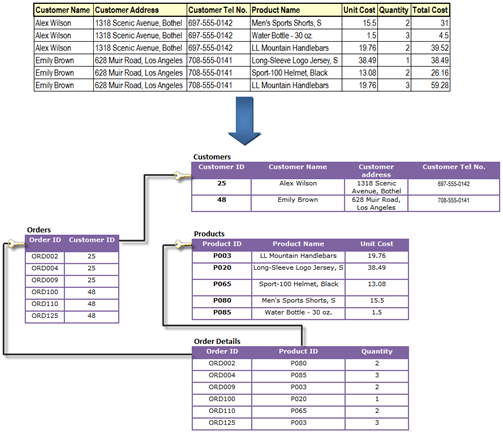
Today I am going to share some of the ideas about the Relationship of the entities and the attributes in the tables. My main concern is the share more knowledge on the Parent-Child Relationship between the entities or tables in the data model and database to get more clear visibility in the data or records. Parent-Child Relationship play an important role to get into the designing the data model and database as well. Because then we can easily explain the idea behind using the schema we just selected to solve the problems in the project or projects.
It is the basic principle to understand and then implement the same into design and develop the physical design of the required schema. If we are not able to understand and explain it to the audience in the discussion and conference meetings then it will not solve our requirements and problems in the projects.
In the data modeling term we have to show the Parent Child Relationship to show which table is playing the role of child and which tables are child tables to the parent table. Let’s have the simple example of the Parent and Child. One parent can have the more than one children and children can have only one parent, which solve our requirements understanding the concept about the relationship among the tables and columns etc.
Here are some of the relationships among the tables and columns. We call the Parent and ParentSet to the parent and child relation. We have lot of the relations like One to One, One to Many, Many to One and Many to Many.
1) One to One relationship (1-1):- If we talking about the one to one relationship, the we can have the example of the Employee and EmployeeID. It means we can have the only one EmployeeID for the Employee and Employee can have only on EmployeeID.
2) One to Many relationship (1-M):- If we are considering the one to many relationship then the family is the best example. In which we can say that parent can have zero, one or more than one child. But child can have only one parent.
3) Many to One relationship (M-1):- Let’s use the example of parent and child to explain the concept of many to one relationship. This tells us about the many to one relationship. It will be helpful for us to get the best use of the Data Definition Language (DDL) and Data Manipulation Language (DML).
4) Many To Many relationship (M-M):- If we are going for the many to many relationship then we can consider the example of the salary belonging to the employees.
This is really important for us to get knowledge in deep to solve the problems regarding the data modelling and database design. If we are working as database architect or developer then we should have understanding about the “How these really works to maintain the clean database without redundancy and dependency as well.
We know that no one is perfect in this world. So, we cannot get the perfect design of the database tables and columns. But still we can start improving the performance of the queries for the inserting, updating and deleting the records without any confusion.
I hope this will be working well for you to understand the concept of the “How these relationship Like one to one, one to many, many to one and at the last many to many.
Thanks,
Sandeep Rajmail

Leave a Reply